

خرطوم اللحام
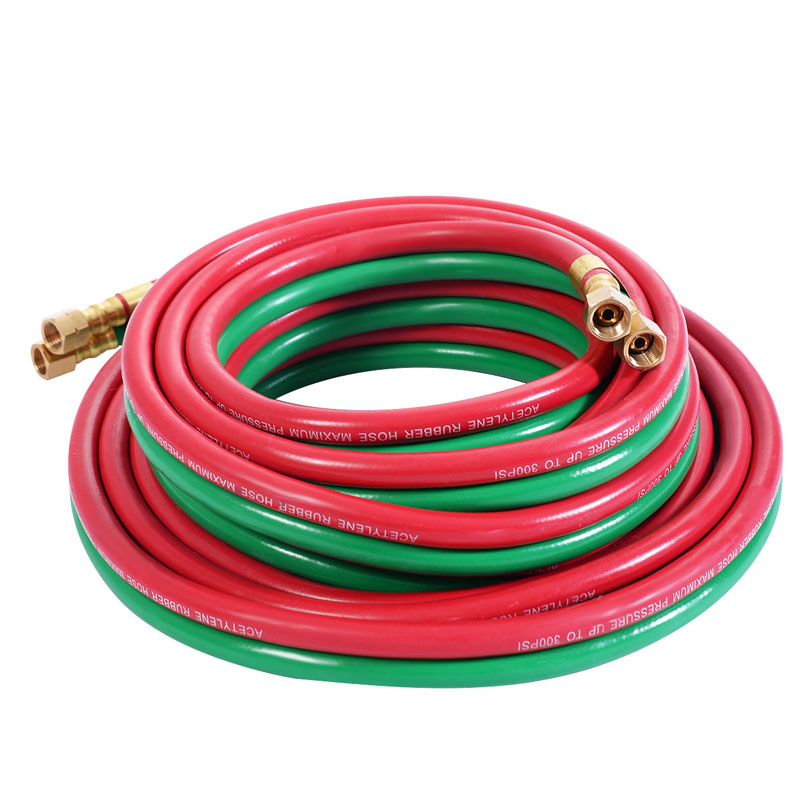
خرطوم اللحام هو نوع من الخراطيم المرنة المصممة لنقل الغازات المستخدمة في اللحام والقطع وغيرها من العمليات الصناعية بأمان. صُممت هذه الخراطيم خصيصًا للتعامل مع بيئات الضغط ودرجات الحرارة العالية، مما يجعلها مثالية للاستخدام مع غازات مثل الأكسجين والأسيتيلين والبروبان وغازات الوقود الأخرى المستخدمة في تطبيقات اللحام. يتكون تركيب خراطيم اللحام عادةً من مادة مطاطية أو بلاستيكية حرارية متينة مقاومة للتآكل والحرارة والتعرض للمواد الكيميائية. يوجد داخل الخرطوم عادةً خطان منفصلان: أحدهما للأكسجين والآخر لغاز الوقود، مما يضمن عدم اختلاطهما. تُستخدم خراطيم اللحام بشكل شائع في صناعات مثل تصنيع المعادن والبناء وإصلاح السيارات وبناء السفن والصيانة. وهي ضرورية لتوصيل الغازات بأمان إلى مشاعل اللحام وأدوات القطع، مما يوفر اللهب اللازم لمهام مثل اللحام باللحام أو اللحام باللحام أو قطع المعادن باللهب. صُممت هذه الخراطيم لمنع التسربات أو الالتواءات أو التمزقات التي قد تسبب حوادث خطيرة أثناء الاستخدام. تتوفر خراطيم اللحام بأحجام وأطوال مختلفة لتناسب مختلف إعدادات اللحام، ويضمن تصميمها تحملها للضغوط ودرجات الحرارة العالية المعتادة لعمليات اللحام. بفضل خواصها المزدوجة وتصميمها المتين، تلعب خراطيم اللحام دورًا محوريًا في ضمان السلامة والكفاءة والفعالية في تشغيل المعادن وغيرها من العمليات الصناعية.
ما هي الميزات الرئيسية التي يجب مراعاتها عند اختيار خرطوم اللحام؟
عند اختيار خرطوم اللحام، يجب مراعاة عدة خصائص رئيسية لضمان ملاءمته لتطبيق اللحام المحدد. من أهم هذه العوامل مادة الخرطوم، إذ يجب أن تكون متينة ومقاومة للحرارة والتآكل والتعرض للمواد الكيميائية. تُصنع معظم خراطيم اللحام من المطاط أو المواد البلاستيكية الحرارية، مما يوفر مرونة ومقاومة للتآكل والتلف مع الحفاظ على متانتها في درجات الحرارة العالية. كما يجب أن يكون الخرطوم قادرًا على تحمل الضغوط العالية، حيث تُخزن غازات اللحام وتُنقل غالبًا تحت ضغط كبير. من الضروري اختيار خرطوم ذي تصنيف ضغط مناسب لمنع التمزق أو التلف أثناء الاستخدام. بالإضافة إلى ذلك، تُصمم خراطيم اللحام عادةً بخطين منفصلين - أحدهما للأكسجين والآخر لغاز الوقود - لضمان بقاء الغازات منفصلة ومنع اختلاطها، مما قد يؤدي إلى مواقف خطيرة. يجب أن يكون الغطاء الخارجي للخرطوم مقاومًا للعوامل الخارجية، مثل التآكل والأشعة فوق البنفسجية وظروف الطقس، حيث تُستخدم خراطيم اللحام غالبًا في البيئات الخارجية. يجب اختيار طول وقطر الخرطوم بناءً على احتياجات عملية اللحام والمسافة بين مصدر الغاز وموقع اللحام. علاوة على ذلك، يُعد التوافق مع أنواع الغازات المستخدمة أمرًا بالغ الأهمية. على سبيل المثال، يجب أن تكون الخراطيم المستخدمة في خدمة الأكسجين مُصممة للاستخدام مع الأكسجين، ويجب ألا تحتوي على أي مواد قد تتفاعل معه، مثل الزيت أو الشحوم. وأخيرًا، من المهم التحقق من أي شهادات صناعية أو امتثال لمعايير السلامة، مثل تلك الصادرة عن إدارة السلامة والصحة المهنية (OSHA) أو الجمعية الوطنية للحماية من الحرائق (NFPA)، لضمان استيفاء الخرطوم لمعايير السلامة المطلوبة لتطبيقات اللحام.
كيف يجب صيانة خراطيم اللحام وتخزينها لضمان السلامة؟
الصيانة والتخزين السليمان لخراطيم اللحام ضروريان لضمان سلامتها وطول عمرها. يجب إجراء فحوصات دورية للخراطيم للتحقق من وجود أي علامات تآكل، مثل الجروح أو التآكل أو الشقوق أو التسريبات، خاصةً بالقرب من التركيبات أو عند ملامسة الخرطوم لأجسام حادة أو أسطح خشنة. تخضع خراطيم اللحام المطاطية، وهي نوع شائع في السوق، لهذه الفحوصات أيضًا.
في حال وجود أي تلف في خرطوم اللحام، يجب استبداله فورًا لتجنب أي مخاطر محتملة. لمنع تلف الخرطوم، تأكد من استخدامه ضمن حدود الضغط ودرجة الحرارة المحددة، لأن تجاوز هذه الحدود قد يؤدي إلى تمزقه. بعد كل استخدام، من الضروري تخزين خراطيم اللحام بشكل صحيح، سواءً كانت من مصنع معروف أم لا، في مكان نظيف وجاف، بعيدًا عن أشعة الشمس المباشرة ودرجات الحرارة العالية والمواد الكيميائية التي قد تُسبب تدهورًا في المادة.
قد تؤثر تقنيات لحام الخراطيم أحيانًا على سلامتها، لذا من المهم الانتباه لهذه الجوانب أثناء الفحص. لفّ الخرطوم بشكل غير محكم أمر بالغ الأهمية لمنع الالتواءات أو الانحناءات، لأن الانحناءات الحادة قد تُضعف الخرطوم وتُقلل من عمره الافتراضي. عند تخزين خراطيم اللحام، تأكد من تعليقها أو فردها بشكل مسطح بدلًا من لفّها بإحكام شديد.
بالإضافة إلى ذلك، يجب الحفاظ على خرطوم اللحام خاليًا من الملوثات، وخاصةً الزيوت والشحوم والمواد الأخرى التي قد تتفاعل مع الغازات المنقولة، وخاصةً في خراطيم الأكسجين، حيث قد تُشكل أي كمية ضئيلة من التلوث خطرًا. في حال تعرض خرطوم اللحام للاستخدام الشاق أو البيئات القاسية، يجب تنظيفه وصيانته بانتظام لإزالة أي تراكم للملوثات.
قبل كل استخدام، من المهم فحص جميع تركيبات ووصلات خرطوم اللحام للتأكد من تثبيتها بإحكام وخلوها من أي تسريبات. كما يُساعد استخدام بكرات أو خطافات تخزين الخراطيم في تنظيمها ومنع تلفها الناتج عن التشابك أو الاحتكاك. باتباع ممارسات الصيانة والتخزين هذه، تحافظ خراطيم اللحام على سلامتها وموثوقيتها وأدائها، مما يضمن بيئة عمل آمنة للمشغلين.
Twin-line Structure and Safety Design Principles: Welding Hoses
SINOPULSE revolutionizes industrial safety through the engineering of twin welding hoses with a cutting-edge dual-chamber structure. Engineered for precision and reliability, our rubber twin welding hoses address the critical need for safe gas separation in high-risk welding and cutting operations, setting a new standard for performance and protection.
At the heart of SINOPULSE’s welding hoses lies a dual-channel architecture, featuring independent inner tubes dedicated to oxygen and combustible gases such as acetylene or propane. This physical separation is not merely a design choice but a safety imperative: by preventing the mixing of explosive gas combinations, it eliminates the risk of catastrophic ignition within the hose itself. The oxygen chamber, constructed from premium rubber compounds, adheres to strict non-oil and non-grease standards, ensuring compliance with oxygen service safety protocols. Meanwhile, the gas chamber is formulated to resist degradation from hydrocarbons, maintaining integrity even under prolonged exposure to aggressive fuel gases.
To fortify this innovative structure, SINOPULSE integrates multiple reinforcement and protection layers. A robust braided layer, typically composed of high-tensile synthetic fibers or stainless steel, wraps around each chamber, providing mechanical strength capable of withstanding working pressures of up to 20 bar and burst pressures exceeding 60 bar. This reinforcement prevents tube collapse or rupture, safeguarding against sudden failures that could endanger operators. The outer cover, crafted from abrasion-resistant rubber, acts as a shield against external threats: it repels sparks, resists flame penetration, and withstands mechanical impacts common in welding environments. Select models also incorporate anti-static properties, dissipating electrical charges to eliminate ignition risks posed by static buildup.
SINOPULSE’s commitment to safety extends beyond material and structural design. Our twin welding hoses adhere to international safety standards, ensuring seamless integration into industrial safety protocols. The dual-chamber design further optimizes performance by maintaining consistent gas flow rates, enabling welders to achieve precise control over flame temperature and cutting precision.
In metal fabrication, shipbuilding, and construction—industries where safety is paramount—SINOPULSE’s rubber twin welding hoses offer a reliable solution that combines advanced engineering with uncompromising protection. Trust in our hoses to deliver both safety and efficiency in every welding operation.
Selection Decision Tree for Welding Hoses by Gas Type
As a trusted welding hose manufacturer, SINOPULSE understands that selecting the right hose depends on the specific gas used in your welding or cutting application. Different gases—oxygen, acetylene, propane, or inert gases like argon—have unique chemical and physical properties, requiring tailored hose designs to ensure safety, efficiency, and compliance. Below is a structured guide to help you choose the ideal twin welding hose or single-line solution for your needs.
1. Oxygen (O₂) Hoses: Prioritize Purity and Non-Reactivity
Oxygen hoses transport compressed oxygen to fuel the welding flame, making material compatibility critical. SINOPULSE’s rubber twin welding hoses for oxygen feature:
Non-Oil, Non-Grease Inner Tubes: Constructed from premium EPDM or neoprene rubber to prevent hydrocarbon contamination, which can cause explosive reactions with pure oxygen.
Flame-Resistant Outer Covers: Engineered to withstand sparks and radiant heat, reducing fire risks in high-temperature work environments.
Pressure Ratings: Working pressures up to 20 bar (290 PSI) to meet standard oxygen service requirements, with burst pressures exceeding 60 bar (870 PSI) for safety redundancy.
2. Acetylene (C₂H₂) Hoses: Resist Hydrocarbon Degradation
Acetylene, a highly flammable gas, requires hoses that can withstand its reactive nature and low working pressures (typically ≤1 bar). Key selection criteria for SINOPULSE acetylene hoses include:
Hydrocarbon-Resistant Compounds: Inner tubes made from butyl rubber or chloroprene to prevent swelling or cracking caused by acetylene exposure.
Anti-Static Properties: Optional conductive layers to dissipate static charges, a critical safety feature for preventing ignition in volatile environments.
Color Coding: Mandatory red outer covers for easy identification, aligning with international safety standards for acetylene lines.
Flexibility in Low Temperatures: Maintains pliability down to -20°C, ensuring reliable performance in cold climates or outdoor welding.
3. Propane (C₃H₈) and Natural Gas Hoses: Balance Pressure and Flexibility
Used in cutting and heating applications, propane hoses must handle moderate pressures (up to 5 bar) while resisting cold brittleness. SINOPULSE solutions offer:
Low-temperature Resistant Formula: Specialized thermoplastic rubber (TPR) inner tubes that remain flexible at -40°C, ideal for construction or agricultural welding in frigid conditions.
Abrasion-Resistant Outer Layers: Thickened rubber covers to withstand rough handling on job sites, where hoses may drag over gravel, metal, or concrete.
Leak-Proof Fittings: Compatibility with propane-specific connectors to minimize gas loss and ensure secure connections during high-demand operations.
4. Inert Gases (Argon, Helium): Ensure Purity for TIG/WIG Welding
For TIG (Tungsten Inert Gas) welding, where gas purity is essential for weld quality, SINOPULSE recommends:
High-Purity Inner Tubes: Smooth-bore polyethylene or silicone liners that prevent gas contamination, critical for welding stainless steel or aluminum.
Low Permeability Design: Multi-layer construction to minimize gas diffusion, ensuring consistent shielding gas flow and reducing porosity in welds.
Lightweight Construction: Braided synthetic fiber reinforcement for easy maneuverability during precision welding tasks that require fine control.
Key Decision Factors Across All Gases
Gas Compatibility: Always verify that the hose’s inner tube material is rated for your specific gas (e.g., acetylene requires non-copper alloys in fittings to avoid acetylide formation).
Pressure vs. Temperature: Match the hose’s working pressure (e.g., low-pressure acetylene vs. high-pressure oxygen) and temperature range (-40°C to +80°C for most models).
Environmental Hazards: Choose anti-UV covers for outdoor use, spark-resistant layers for proximity to welding arcs, or chemical-resistant coatings for industrial environments with corrosive agents.
Dual vs. Single Chamber: Twin welding hoses are ideal for oxy-fuel setups requiring parallel oxygen and gas lines, while single-line hoses suit inert gas or standalone fuel systems.
Trust SINOPULSE for Tailored Solutions
With decades of expertise in welding hose engineering, SINOPULSE offers a comprehensive range of rubber twin welding hoses and single-line products, each designed to meet the unique demands of your gas type and application. Our team can help you navigate certifications, material specifications, and custom fittings to ensure your welding system operates safely and efficiently.
Contact us today to discuss how our precision-engineered hoses can elevate your welding operations.