

خرطوم كيميائي
خرطوم المواد الكيميائية هو نوع من الخراطيم مصمم خصيصًا لنقل مجموعة واسعة من المواد الكيميائية بأمان، بما في ذلك الأحماض والقلويات والمذيبات والزيوت وغيرها من السوائل الخطرة أو العدوانية. تُصنع هذه الخراطيم من مواد مقاومة للتآكل والتأثيرات الكيميائية والاحتكاك لضمان تشغيل آمن وفعال. عادةً ما تُصنع البطانة الداخلية للخرطوم الكيميائي من المطاط الصناعي أو PTFE (التفلون) أو مركبات متخصصة أخرى توفر مقاومة عالية لمجموعة متنوعة من المواد الكيميائية. غالبًا ما يُعزز الغطاء الخارجي بسلك فولاذي مضفر أو طبقات نسيجية لزيادة القوة وتوفير الحماية من التلف الميكانيكي. تُستخدم خراطيم المواد الكيميائية في العديد من الصناعات، بما في ذلك التصنيع الكيميائي، والأدوية، والزراعة، والنفط والغاز، وإنتاج الأغذية، حيث يلزم نقل المواد الخطرة أو شديدة التفاعل. على سبيل المثال، في الصناعة الكيميائية، تُستخدم هذه الخراطيم لنقل المواد الكيميائية الصناعية بين الخزانات ومعدات المعالجة، بينما تُستخدم في الزراعة لرش المبيدات الحشرية والأسمدة. كما تُستخدم خراطيم المواد الكيميائية لنقل الوقود ومواد التشحيم في صناعة النفط والغاز. إن قدرتها على مقاومة التحلل الكيميائي والضغط ودرجات الحرارة المرتفعة تجعلها لا غنى عنها في التطبيقات التي تكون فيها السلامة والموثوقية أمرًا بالغ الأهمية.
ما هي العوامل التي يجب مراعاتها عند اختيار خرطوم المواد الكيميائية؟
عند اختيار خرطوم كيميائي، من الضروري مراعاة عدة عوامل رئيسية لضمان ملاءمته للتطبيق المحدد. أول عامل يجب تقييمه هو توافق مادة الخرطوم مع المواد الكيميائية المنقولة. يمكن للمواد الكيميائية المختلفة أن تسبب مستويات متفاوتة من التلف لمواد الخرطوم، لذا من الضروري اختيار خرطوم مقاوم للمواد الكيميائية مصنوع من مواد مقاومة للأنواع الكيميائية المحددة المستخدمة. تشمل المواد الشائعة للخراطيم الكيميائية، مثل خراطيم المطاط الكيميائي، المطاط الصناعي (مثل EPDM والنتريل)، ومادة PTFE، والبولي إيثيلين، والتي تتميز بمقاومة كيميائية ممتازة.
يُعدّ تصنيف ضغط خرطوم المواد الكيميائية عاملاً مهماً آخر. بالنسبة للأنظمة ذات متطلبات الضغط العالي، يجب اختيار خرطوم كيميائي عالي الضغط لتحمله ضغط النظام دون أي عطل. بالإضافة إلى ذلك، يُعدّ نطاق درجة الحرارة بالغ الأهمية، حيث قد يلزم نقل بعض المواد الكيميائية بدرجات حرارة عالية أو منخفضة عبر خرطوم المواد الكيميائية.
المرونة عامل مهم آخر، خاصةً بالنسبة للخراطيم الكيميائية المرنة المستخدمة في الأنظمة التي تتطلب حركة أو انحناءً متكررًا. يجب أيضًا اختيار طول وقطر الخرطوم بما يتناسب مع متطلبات النظام لضمان تدفق جيد وتجنب فقدان الضغط غير الضروري. تُضاف تعزيزات مثل الأسلاك الفولاذية المضفرة أو الحلزونية لزيادة متانة الخرطوم الكيميائي ومنع انكماشه أو انهياره.
أخيرًا، تأكد من أن خرطوم المواد الكيميائية يفي بمعايير وشهادات الصناعة ذات الصلة، مثل تلك التي وضعتها إدارة الغذاء والدواء الأمريكية (FDA) أو المنظمة الدولية للمعايير (ISO) أو المنظمة الأوروبية (EN)، لضمان أمان استخدامه في تطبيقات محددة. بمراعاة هذه العوامل، يمكنك اختيار خرطوم كيميائي يوفر خدمة آمنة وموثوقة على المدى الطويل.
ما هي المواد المستخدمة عادة في تصنيع الخراطيم الكيميائية، ولماذا هي مناسبة؟
تُصنع الخراطيم الكيميائية من مواد مختارة لمقاومتها لمجموعة واسعة من المواد الكيميائية والظروف القاسية التي قد تواجهها في التطبيقات الصناعية والتجارية. يُعد المطاط الصناعي، مثل EPDM (مونومر إيثيلين بروبيلين ديين)، من أكثر المواد شيوعًا في صناعة الخراطيم الكيميائية، حيث يوفر مقاومة ممتازة للأحماض والقلويات والعوامل الجوية. كما يُستخدم مطاط النتريل بشكل شائع لمقاومته للزيوت والوقود والمذيبات، مما يجعله مثاليًا لنقل المنتجات البترولية أو المواد الكيميائية الخطرة. يُعد PTFE (التفلون) مادة شائعة أخرى في صناعة الخراطيم الكيميائية نظرًا لطبيعته غير التفاعلية ومقاومته لمجموعة واسعة من المواد الكيميائية العدوانية ودرجات الحرارة العالية. تُعد خراطيم PTFE مناسبة بشكل خاص لنقل الأحماض القوية والمواد الكاوية والمذيبات التي قد تُسبب تحلل المواد الأخرى. بالإضافة إلى ذلك، يُستخدم البولي إيثيلين في تطبيقات معينة لمقاومته الكيميائية ومرونته، وخاصةً في الخراطيم الكيميائية الزراعية والغذائية. لزيادة المتانة والقوة، غالبًا ما تُعزز الخراطيم الكيميائية بطبقات من الأسلاك الفولاذية أو الضفائر النسيجية. تمنع هذه التعزيزات الخرطوم من الانهيار تحت الضغط، وتضمن مرونته، وتوفر حماية من التلف الميكانيكي الخارجي. يضمن مزيج هذه المواد قدرة الخراطيم الكيميائية على التعامل بأمان وموثوقية مع المواد الكيميائية المصممة لها، مع الحفاظ على مرونتها ومتانتها في البيئات الصعبة.
Decoding the Corrosion-Resistant Core of Chemical Hoses: Material Science and Engineering Design
SINOPULSE combines advanced material science with precision engineering to create flexible chemical hoses that excel in transporting aggressive fluids. The ability to resist corrosion hinges on carefully selected inner tube materials, reinforced structures, and protective layers—each element designed to withstand specific chemical challenges. Let’s explore the technical foundations that make SINOPULSE chemical-resistant hoses the trusted choice for demanding industrial applications.
1. Fluoropolymer Liners: The First Line of Defense
At the heart of SINOPULSE chemical transfer hoses lies a fluoropolymer inner tube, typically PTFE (Polytetrafluoroethylene) or FEP (Fluorinated Ethylene Propylene). These materials owe their exceptional corrosion resistance to a unique molecular structure: a tightly packed carbon-fluorine bond (C-F) that is one of the strongest in polymer chemistry. This bond resists breakage from strong acid (e.g., sulfuric acid), strong base (e.g., sodium hydroxide), and solvents (e.g., acetone), making PTFE-lined hoses compatible with over 98% of industrial chemicals. For example, in pharmaceutical manufacturing, PTFE-lined hoses safely transport concentrated hydrochloric acid without swelling or degradation, maintaining fluid purity and hose integrity over years of use.
2. Elastomeric Compounds for Specialized Chemistries
When applications demand flexibility at lower temperatures or resistance to specific chemical families, SINOPULSE employs high-performance elastomers like fluoroelastomer (FKM) or ethylene-propylene-diene monomer (EPDM). FKM, with its cross-linked fluorocarbon structure, excels in resisting petroleum-based solvents and high-temperature oxidizers, making it ideal for aerospace hydraulic fluids. EPDM, conversely, thrives in aqueous environments, providing superior resistance to ketones and steam—critical for wastewater treatment systems where dilute acids and alkalis are common. These materials undergo rigorous swelling tests (e.g., ≤0.5% volume change in ASTM D471) to ensure long-term reliability.
3. Reinforcement Layers: Structural Integrity Under Pressure
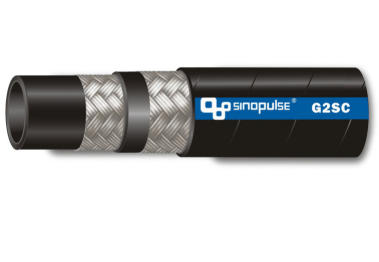
Even the most corrosion-resistant liners require robust support to handle high-pressure applications. SINOPULSE high-pressure chemical hoses integrate braided or spiral-wound reinforcement layers, such as stainless steel wire or aramid fibers, to distribute internal pressure evenly. A 304 stainless steel braid, for instance, adds mechanical strength capable of withstanding 500 bar (7250 PSI) burst pressure while remaining non-reactive to most chemicals. This design prevents liner collapse or delamination, ensuring safe fluid transfer in refinery pipelines or chemical reactor feed systems.
4. Protective Outer Covers: Shielding Against External Threats
The outer layer of SINOPULSE chemical hoses is engineered to protect against external hazards like abrasion, UV radiation, and physical impact. Polyurethane (PU) or chloroprene rubber covers offer excellent resistance to cutting and weathering, vital for outdoor chemical transfer in mining or offshore platforms. For static-sensitive environments, anti-static additives in the outer layer dissipate electrical charges, eliminating ignition risks when handling flammable solvents like methanol.
Engineered for Synergy: How Layers Work Together
The true power of SINOPULSE chemical-resistant hoses lies in the synergy between layers: the fluoropolymer liner repels chemical attack, the reinforcement layer maintains structural stability, and the outer cover shields against environmental damage. This tri-layer system undergoes rigorous testing, including permeation resistance (ASTM F739) to ensure minimal chemical leakage and thermal cycling to validate performance across extreme temperatures.
In industries where chemical compatibility and safety are non-negotiable—from petrochemical processing to semiconductor manufacturing—SINOPULSE’s material expertise and engineering precision deliver chemical hoses that redefine corrosion resistance. Trust our solutions to protect your processes, people, and profits, no matter how aggressive the fluid.
Precision Fluid Transfer: The Stringent Demands of High-Purity Chemical Hoses in Semiconductor and Pharmaceutical Industries
In the semiconductor and pharmaceutical sectors, where precision and purity are non-negotiable, SINOPULSE, a leading chemical hose manufacturer, rises to the challenge with specialized high-purity chemical hoses. These industries demand hoses that not only resist corrosion but also maintain the integrity of ultra-sensitive fluids, and SINOPULSE’s engineered solutions meet these exacting standards.
Purity as the Cornerstone
Semiconductor manufacturing, particularly in wafer fabrication, relies on highly corrosive etching agents and ultra-pure water. SINOPULSE’s flexible chemical hoses feature smooth-bore EPDM liners. In pharmaceutical production, where drug safety is paramount, our hoses comply with FDA and USP Class VI standards, guaranteeing that no chemical residues leach into medications during transfer. For instance, when transporting sterile solutions for injectable drugs, SINOPULSE chemical transfer hoses maintain the fluid’s sterility throughout the process.
Controlled Environment Compatibility
Both industries operate in tightly controlled environments. Semiconductor facilities require hoses that can withstand rapid temperature fluctuations during plasma etching and annealing processes. SINOPULSE’s high-purity chemical hoses, reinforced with inert materials like stainless steel braids, retain their structural integrity under extreme conditions without reacting with aggressive chemicals. In pharmaceutical cleanrooms, where particulate matter is strictly monitored, our hoses are designed to prevent outgassing, ensuring that volatile compounds do not compromise air quality or product purity.
High-Pressure Performance with Precision
Semiconductor wet processing and pharmaceutical synthesis often involve high-pressure fluid delivery. SINOPULSE high-pressure chemical hoses are engineered to handle pressures up to 500 bar (7250 PSI) while maintaining precision flow control. The multi-layer construction, combining a corrosion-resistant fluoropolymer inner tube with a robust reinforcement layer, ensures consistent performance without leaks or pressure drops. This reliability is crucial in semiconductor lithography, where even a minor fluid deviation can render an entire wafer batch defective.
Compliance Beyond Standards
SINOPULSE understands that these industries operate under strict regulatory frameworks. Our chemical-resistant hoses undergo rigorous testing, including biocompatibility evaluations and permeation resistance assessments, to meet international guidelines. Whether it’s safeguarding the purity of semiconductor-grade chemicals or ensuring the safety of pharmaceutical formulations, SINOPULSE’s high-purity hoses are the trusted choice for precision fluid transfer in these high-stakes industries.