

용접 호스
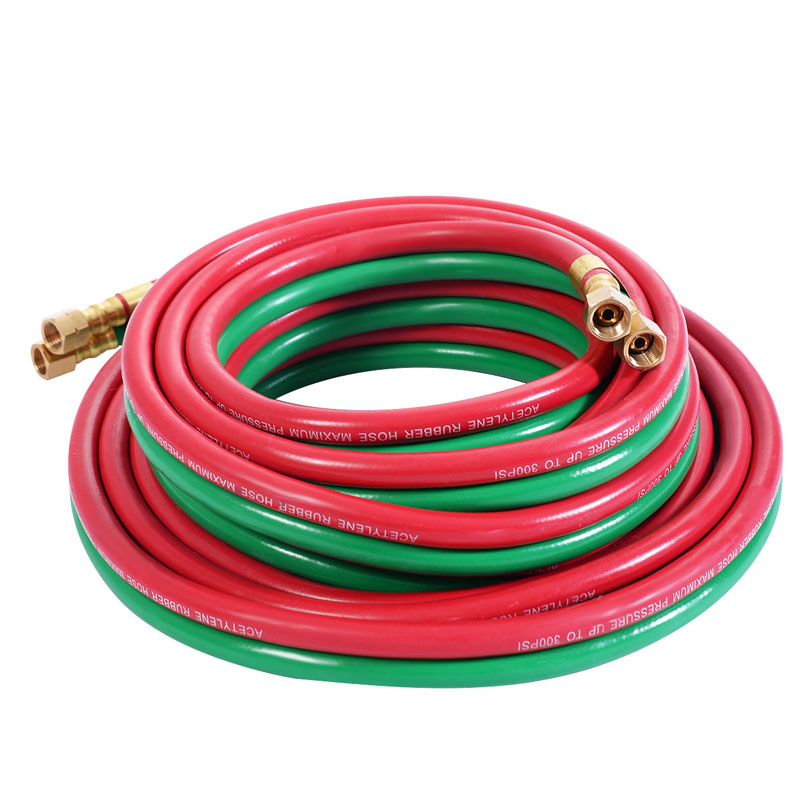
용접 호스는 용접, 절단 및 기타 산업 공정에 사용되는 가스를 안전하게 운반하도록 설계된 유연한 호스의 한 종류입니다. 이 호스는 고압 및 고온 환경을 견딜 수 있도록 특별히 설계되어 산소, 아세틸렌, 프로판 및 기타 용접 작업에 사용되는 연료 가스와 같은 가스와 함께 사용하기에 이상적입니다. 용접 호스는 일반적으로 마모, 열 및 화학 물질 노출에 강한 내구성 있는 고무 또는 열가소성 소재로 제작됩니다. 호스 내부에는 일반적으로 산소용과 연료 가스용의 두 개의 별도 라인이 있어 서로 섞이지 않도록 합니다. 용접 호스는 금속 제작, 건설, 자동차 수리, 조선 및 유지보수와 같은 산업에서 널리 사용됩니다. 용접 호스는 용접 토치와 절삭 공구에 가스를 안전하게 공급하여 브레이징, 납땜 또는 금속 화염 절단과 같은 작업에 필요한 불꽃을 제공하는 데 필수적입니다. 이 호스는 사용 중 위험한 사고를 유발할 수 있는 누출, 꼬임 또는 파열을 방지하도록 설계되었습니다. 용접 호스는 다양한 용접 환경에 맞춰 다양한 크기와 길이로 제공되며, 용접 작업에서 흔히 발생하는 높은 압력과 온도를 견딜 수 있도록 설계되었습니다. 이중 용도 기능과 견고한 설계를 갖춘 용접 호스는 금속 가공 및 기타 산업 공정에서 안전성, 효율성, 그리고 효과성을 보장하는 데 중요한 역할을 합니다.
용접 호스를 선택할 때 고려해야 할 주요 특징은 무엇입니까?
용접 호스를 선택할 때는 특정 용접 용도에 적합한지 확인하기 위해 몇 가지 주요 특징을 고려해야 합니다. 가장 중요한 요소 중 하나는 호스의 재질입니다. 호스는 내구성이 뛰어나고 열, 마모, 화학 물질 노출에 강해야 합니다. 대부분의 용접 호스는 고무 또는 열가소성 소재로 제작되어 유연성과 내마모성을 제공하는 동시에 고온 환경에서도 그 성능을 유지합니다. 또한 용접 가스는 높은 압력 하에서 보관 및 운송되는 경우가 많으므로 호스는 고압에도 견딜 수 있어야 합니다. 사용 중 파열이나 파손을 방지하기 위해 적절한 압력 등급의 호스를 선택하는 것이 중요합니다. 또한, 용접 호스는 일반적으로 산소용과 연료용 두 개의 별도 배관으로 설계되어 가스가 분리되어 혼합되지 않도록 합니다. 혼합은 위험한 상황을 초래할 수 있습니다. 용접 호스는 종종 실외 환경에서 사용되므로 호스의 외부 커버는 마모, 자외선, 기상 조건과 같은 외부 요인에 대한 내구성도 갖춰야 합니다. 호스의 길이와 직경은 용접 공정의 요구 사항과 가스 공급원과 용접 부위 사이의 거리를 고려하여 선택해야 합니다. 또한, 사용되는 특정 가스 종류와의 호환성도 매우 중요합니다. 예를 들어, 산소 공급용 호스는 산소 사용에 적합한 등급을 받아야 하며, 오일이나 그리스처럼 산소와 반응할 수 있는 물질을 포함하지 않아야 합니다. 마지막으로, 호스가 용접 작업에 필요한 안전 기준을 충족하는지 확인하기 위해 OSHA 또는 NFPA(미국소방협회)와 같은 산업 인증 또는 안전 표준 준수 여부를 확인하는 것이 중요합니다.
안전을 보장하려면 용접 호스를 어떻게 유지 관리하고 보관해야 합니까?
용접 호스의 적절한 유지관리 및 보관은 사용 중 안전과 수명을 보장하는 데 필수적입니다. 특히 호스 피팅 근처나 날카로운 물체 또는 거친 표면에 닿는 부위에 절단, 마모, 균열 또는 누수와 같은 마모 흔적이 있는지 정기적으로 점검해야 합니다. 시중에서 널리 사용되는 고무 용접 호스도 이러한 점검 대상입니다.
용접 호스에 손상이 발견되면 잠재적 위험을 방지하기 위해 즉시 교체해야 합니다. 호스 고장을 방지하려면 호스를 지정된 압력 및 온도 범위 내에서 사용해야 합니다. 이러한 범위를 초과하면 파열될 수 있습니다. 사용 후에는 유명 용접 호스 제조업체의 제품이든 아니든 깨끗하고 건조한 곳에 직사광선, 극한의 온도 또는 재료를 분해할 수 있는 화학 물질을 피해 보관하는 것이 중요합니다.
호스 용접 기술은 호스의 무결성에 영향을 미칠 수 있으므로 검사 시 이러한 측면에 주의를 기울이는 것이 중요합니다. 호스를 느슨하게 감는 것은 꼬임이나 휘어짐을 방지하는 데 매우 중요합니다. 심하게 휘면 호스가 약해지고 수명이 단축될 수 있습니다. 용접 호스를 보관할 때는 너무 꽉 감지 말고 걸어 두거나 평평하게 놓으십시오.
또한 용접 호스는 오염 물질, 특히 이송되는 가스와 반응할 수 있는 기름, 그리스 또는 기타 물질이 없도록 관리해야 합니다. 특히 산소 호스의 경우, 소량의 오염이라도 위험한 상황을 초래할 수 있습니다. 용접 호스를 과중한 작업이나 열악한 환경에 노출된 경우, 오염 물질 축적을 제거하기 위해 정기적인 청소 및 유지관리를 수행해야 합니다.
매번 사용하기 전에 용접 호스의 모든 부속품과 연결부를 점검하여 단단히 고정되어 있고 누출이 없는지 확인하는 것이 중요합니다. 호스 릴이나 보관 후크를 사용하면 호스를 정리하고 엉킴이나 마모로 인한 손상을 방지하는 데 도움이 됩니다. 이러한 유지 관리 및 보관 방법을 준수하면 용접 호스의 안전성, 신뢰성 및 성능을 유지하여 작업자의 안전한 작업 환경을 보장할 수 있습니다.
Twin-line Structure and Safety Design Principles: Welding Hoses
SINOPULSE revolutionizes industrial safety through the engineering of twin welding hoses with a cutting-edge dual-chamber structure. Engineered for precision and reliability, our rubber twin welding hoses address the critical need for safe gas separation in high-risk welding and cutting operations, setting a new standard for performance and protection.
At the heart of SINOPULSE’s welding hoses lies a dual-channel architecture, featuring independent inner tubes dedicated to oxygen and combustible gases such as acetylene or propane. This physical separation is not merely a design choice but a safety imperative: by preventing the mixing of explosive gas combinations, it eliminates the risk of catastrophic ignition within the hose itself. The oxygen chamber, constructed from premium rubber compounds, adheres to strict non-oil and non-grease standards, ensuring compliance with oxygen service safety protocols. Meanwhile, the gas chamber is formulated to resist degradation from hydrocarbons, maintaining integrity even under prolonged exposure to aggressive fuel gases.
To fortify this innovative structure, SINOPULSE integrates multiple reinforcement and protection layers. A robust braided layer, typically composed of high-tensile synthetic fibers or stainless steel, wraps around each chamber, providing mechanical strength capable of withstanding working pressures of up to 20 bar and burst pressures exceeding 60 bar. This reinforcement prevents tube collapse or rupture, safeguarding against sudden failures that could endanger operators. The outer cover, crafted from abrasion-resistant rubber, acts as a shield against external threats: it repels sparks, resists flame penetration, and withstands mechanical impacts common in welding environments. Select models also incorporate anti-static properties, dissipating electrical charges to eliminate ignition risks posed by static buildup.
SINOPULSE’s commitment to safety extends beyond material and structural design. Our twin welding hoses adhere to international safety standards, ensuring seamless integration into industrial safety protocols. The dual-chamber design further optimizes performance by maintaining consistent gas flow rates, enabling welders to achieve precise control over flame temperature and cutting precision.
In metal fabrication, shipbuilding, and construction—industries where safety is paramount—SINOPULSE’s rubber twin welding hoses offer a reliable solution that combines advanced engineering with uncompromising protection. Trust in our hoses to deliver both safety and efficiency in every welding operation.
Selection Decision Tree for Welding Hoses by Gas Type
As a trusted welding hose manufacturer, SINOPULSE understands that selecting the right hose depends on the specific gas used in your welding or cutting application. Different gases—oxygen, acetylene, propane, or inert gases like argon—have unique chemical and physical properties, requiring tailored hose designs to ensure safety, efficiency, and compliance. Below is a structured guide to help you choose the ideal twin welding hose or single-line solution for your needs.
1. Oxygen (O₂) Hoses: Prioritize Purity and Non-Reactivity
Oxygen hoses transport compressed oxygen to fuel the welding flame, making material compatibility critical. SINOPULSE’s rubber twin welding hoses for oxygen feature:
Non-Oil, Non-Grease Inner Tubes: Constructed from premium EPDM or neoprene rubber to prevent hydrocarbon contamination, which can cause explosive reactions with pure oxygen.
Flame-Resistant Outer Covers: Engineered to withstand sparks and radiant heat, reducing fire risks in high-temperature work environments.
Pressure Ratings: Working pressures up to 20 bar (290 PSI) to meet standard oxygen service requirements, with burst pressures exceeding 60 bar (870 PSI) for safety redundancy.
2. Acetylene (C₂H₂) Hoses: Resist Hydrocarbon Degradation
Acetylene, a highly flammable gas, requires hoses that can withstand its reactive nature and low working pressures (typically ≤1 bar). Key selection criteria for SINOPULSE acetylene hoses include:
Hydrocarbon-Resistant Compounds: Inner tubes made from butyl rubber or chloroprene to prevent swelling or cracking caused by acetylene exposure.
Anti-Static Properties: Optional conductive layers to dissipate static charges, a critical safety feature for preventing ignition in volatile environments.
Color Coding: Mandatory red outer covers for easy identification, aligning with international safety standards for acetylene lines.
Flexibility in Low Temperatures: Maintains pliability down to -20°C, ensuring reliable performance in cold climates or outdoor welding.
3. Propane (C₃H₈) and Natural Gas Hoses: Balance Pressure and Flexibility
Used in cutting and heating applications, propane hoses must handle moderate pressures (up to 5 bar) while resisting cold brittleness. SINOPULSE solutions offer:
Low-temperature Resistant Formula: Specialized thermoplastic rubber (TPR) inner tubes that remain flexible at -40°C, ideal for construction or agricultural welding in frigid conditions.
Abrasion-Resistant Outer Layers: Thickened rubber covers to withstand rough handling on job sites, where hoses may drag over gravel, metal, or concrete.
Leak-Proof Fittings: Compatibility with propane-specific connectors to minimize gas loss and ensure secure connections during high-demand operations.
4. Inert Gases (Argon, Helium): Ensure Purity for TIG/WIG Welding
For TIG (Tungsten Inert Gas) welding, where gas purity is essential for weld quality, SINOPULSE recommends:
High-Purity Inner Tubes: Smooth-bore polyethylene or silicone liners that prevent gas contamination, critical for welding stainless steel or aluminum.
Low Permeability Design: Multi-layer construction to minimize gas diffusion, ensuring consistent shielding gas flow and reducing porosity in welds.
Lightweight Construction: Braided synthetic fiber reinforcement for easy maneuverability during precision welding tasks that require fine control.
Key Decision Factors Across All Gases
Gas Compatibility: Always verify that the hose’s inner tube material is rated for your specific gas (e.g., acetylene requires non-copper alloys in fittings to avoid acetylide formation).
Pressure vs. Temperature: Match the hose’s working pressure (e.g., low-pressure acetylene vs. high-pressure oxygen) and temperature range (-40°C to +80°C for most models).
Environmental Hazards: Choose anti-UV covers for outdoor use, spark-resistant layers for proximity to welding arcs, or chemical-resistant coatings for industrial environments with corrosive agents.
Dual vs. Single Chamber: Twin welding hoses are ideal for oxy-fuel setups requiring parallel oxygen and gas lines, while single-line hoses suit inert gas or standalone fuel systems.
Trust SINOPULSE for Tailored Solutions
With decades of expertise in welding hose engineering, SINOPULSE offers a comprehensive range of rubber twin welding hoses and single-line products, each designed to meet the unique demands of your gas type and application. Our team can help you navigate certifications, material specifications, and custom fittings to ensure your welding system operates safely and efficiently.
Contact us today to discuss how our precision-engineered hoses can elevate your welding operations.