You know, it's funny. Been spending all year on these sites, watching things get built, and the biggest trend I've seen? Everyone’s chasing lighter, stronger materials. Seems simple, right? But it's a rabbit hole, trust me.
To be honest, the amount of times I’ve seen designs that look good on paper but fall apart the second a worker actually tries to use them… it’s astounding. Like, fancy CAD models with curves that are impossible to fabricate without a week’s worth of adjustments. You'd think engineers would spend more time on-site, wouldn't you?
And then there's the materials. We’re mostly working with high-tensile steel these days, obviously. That stuff smells like… well, like a factory, if you know what I mean. And you gotta treat it right, or it rusts faster than you can blink. We’ve been experimenting with some new polymer composites too. Lighter, yeah, but they feel…plasticky. Still, they hold up surprisingly well in certain applications.
The Current Landscape of Hydraulic Hose Supply
Look, the hydraulic hose supply chain is…complicated. It’s not just about getting a hose; it's about certifications, pressure ratings, material compatibility. We've got suppliers all over, but finding reliable ones? That’s the real challenge. The demand is constantly increasing with infrastructure projects booming worldwide, especially in Asia.
Have you noticed how everyone’s talking about “just-in-time” delivery? Sounds great in theory, but when a factory in China shuts down for a week because of some local regulation… suddenly, everyone's scrambling. It's a real headache.
Design Pitfalls and Common Mistakes
Strangely enough, the biggest mistake I see is over-engineering. They design these hoses to withstand pressures they never actually need to. It adds cost, adds weight, makes installation harder. You end up with a hose that’s perfectly capable of stopping a tank…but it’s being used to power a small excavator. It's ridiculous.
Another thing? Ignoring the bending radius. I encountered this at a construction site in Dubai last time, this engineer designed a system with such a tight bend, the hose was basically begging to burst. We had to redo the entire section. It’s the little things, you know?
And then there's the connector issue. Using the wrong connector can lead to leaks, pressure loss, and eventually, catastrophic failure. It seems obvious, but you’d be surprised how many shortcuts people take.
Material Science: A Hands-On Perspective
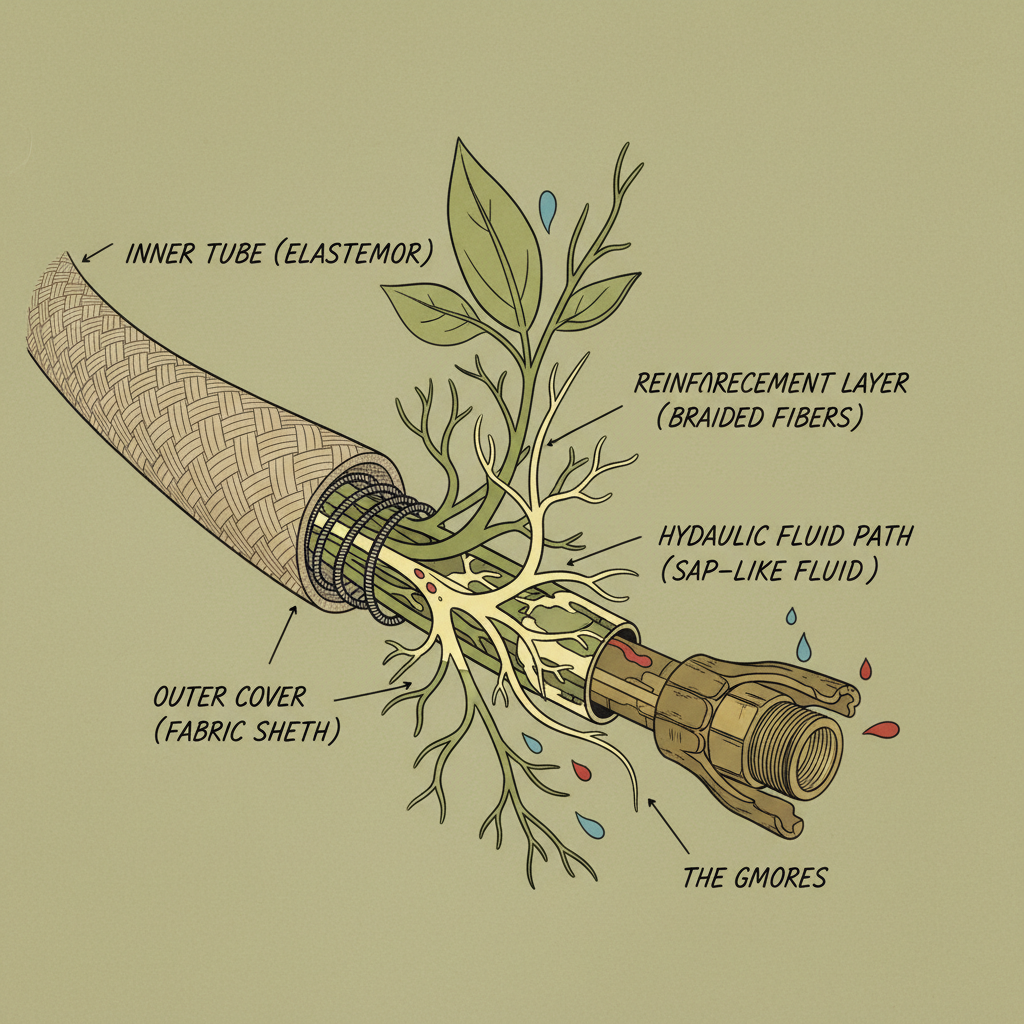
Okay, so we’re talking about rubber, steel wire, and synthetic fibers mostly. The rubber’s the key, right? Different compounds for different fluids, different temperatures, different pressures. You can smell the difference sometimes, honestly. A good quality rubber will have a slight vanilla scent, while a cheaper one… well, let's just say it doesn’t.
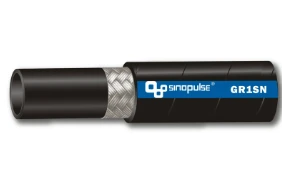
The steel wire is what gives the hose its strength. High-tensile steel is the standard, but the quality varies wildly. You can feel it when you bend the hose. A good hose will be flexible but still hold its shape. A cheap one will feel… flimsy. It’s hard to describe, you just get a feel for it after a while.
Then there are the synthetic fibers – nylon, polyester, rayon – used for reinforcement. They help prevent kinking and improve flexibility. The interplay between these materials is crucial. Get the balance wrong, and you’ve got a hose that’s either too stiff or too weak.
Real-World Testing and Performance
Forget the lab tests. They're useful, sure, but they don't tell you how a hose will perform when it’s covered in mud, exposed to extreme temperatures, and repeatedly bent and twisted on a construction site. We do our own testing, basically breaking things until they break. We pressurize hoses until they burst, bend them until they crack, and expose them to all sorts of nasty chemicals.
I remember one test we did last year with a new polymer composite hose. We left it exposed to saltwater for a month and then pressurized it. It held up surprisingly well. But then we tried bending it repeatedly… and it delaminated. That was a valuable lesson.
Hydraulic Hose Supplier Performance Metrics
User Behavior and Unexpected Applications
People use these hoses for things you wouldn't believe. I saw one guy using a hydraulic hose to siphon water out of a flooded basement. Not its intended purpose, obviously, but hey, it worked. They often get repurposed as makeshift supports or even tie-downs on construction sites.
Anyway, I think one of the biggest things we've learned is that users don't always read the instructions. They just grab the hose and start using it. So, it needs to be idiot-proof, basically. That means clear markings, robust connectors, and a design that’s forgiving of abuse.
Advantages, Disadvantages, and the Balancing Act
The advantages are pretty clear: power, reliability, and versatility. Hydraulic systems are incredibly efficient, and the hoses are relatively easy to install and maintain. But they're not perfect. Leaks are a constant concern, and the hoses can be heavy and bulky. Also, they're susceptible to damage from abrasion and extreme temperatures.
It’s all about finding the right balance. You want a hose that’s strong enough to withstand the pressure, flexible enough to handle the bends, and durable enough to last, but also lightweight and affordable. It's a constant trade-off.
And honestly? Sometimes the fanciest, most expensive hose isn't the best choice. Sometimes a simpler, more robust design is all you need.
Customization Options and Specific Cases
We get a lot of requests for custom hoses. Different lengths, different fittings, different materials. Last month, that small boss in Shenzhen who makes smart home devices insisted on changing the interface to Type-C, and the result was a complete disaster. They wanted something “sleek and modern,” but it turns out Type-C connectors aren’t exactly ideal for high-pressure hydraulic systems. It took us a week to convince him to go back to the standard fittings.
But sometimes customization is essential. For example, we worked with a mining company that needed hoses specifically designed to withstand extreme abrasion from rocks and debris. We had to use a special abrasion-resistant polymer and reinforce the hose with multiple layers of steel wire.
Ultimately, whether a customization is worth it depends on the specific application and the customer's needs.
Summary of Hydraulic Hose Supplier Customization Analysis
| Application Type |
Customization Required |
Complexity Level (1-5) |
Estimated Cost Increase (%) |
| Construction Equipment |
Length & Fitting Variations |
2 |
5-10 |
| Mining Operations |
Abrasion Resistant Material |
4 |
20-30 |
| Agricultural Machinery |
Chemical Compatibility |
3 |
10-15 |
| Aerospace Applications |
Lightweight & High-Pressure |
5 |
40-60 |
| Robotics & Automation |
Compact Size & Flexibility |
3 |
15-20 |
| Marine Environments |
Corrosion Resistance |
4 |
25-35 |
FAQS
Thermoplastic hoses are generally lighter and more resistant to chemicals, making them suitable for specific applications, while rubber hoses offer superior flexibility and are better suited for high-pressure, high-temperature environments. The choice depends heavily on the intended use and the type of fluid being conveyed. It's not a one-size-fits-all situation; you have to consider the whole system.
Always exceed the maximum system pressure by at least a 2:1 safety factor. Consider peak pressures, surge pressures, and temperature fluctuations. Check the hose manufacturer's specifications and ensure the hose is rated for the fluid you’re using. Don't skimp on this; a burst hose can be dangerous and costly.
Store hoses in a cool, dry, and dark place, away from direct sunlight and ozone sources. Avoid kinking or bending them too tightly. Ideally, they should be stored on a reel or hung loosely to prevent stress. And don’t store them near chemicals that could degrade the rubber.
Regular inspections are crucial. Look for cracks, abrasions, leaks, and kinks. The frequency depends on the application, but a monthly visual inspection is a good starting point. Replace hoses immediately if any damage is detected. Preventative maintenance is always cheaper than dealing with a failure.
The most common causes are abrasion, kinking, overheating, chemical incompatibility, and improper installation. Also, using the wrong hose for the application or exceeding the pressure rating can lead to failure. Basically, anything that stresses the hose beyond its limits.
Repairing a hose should only be done by qualified personnel using approved methods. In most cases, replacement is the safer and more reliable option, especially for high-pressure applications. A repaired hose is always a potential weak point.
Conclusion
So, what have we learned? Hydraulic hoses aren’t just rubber tubes. They’re critical components in complex systems, and choosing the right one—or customizing one to fit the need—requires a deep understanding of materials, pressures, and real-world conditions. It’s a balancing act between performance, cost, and reliability.
Ultimately, whether this thing works or not, the worker will know the moment he tightens the screw. And that's the only test that truly matters. If it holds, great. If it doesn’t… well, you better have a spare on hand.



 Call Us+86-158-0331-9351
 Emailcarrie@sinopulse.cn
 AddressHandan City, Hebei , China