To be honest, the whole hydraulic hose for sale game has been changing fast. Everyone’s chasing higher pressures, tighter bends, and materials that can withstand…well, everything. It’s not just about making a tube that doesn’t burst anymore, you know? It's about how long it actually lasts on a dig site, in a factory, or even on a ship. I spend enough time crawling around in the dirt and grease to tell you, fancy specs on a datasheet don’t mean a thing if it kinks after a month.
Have you noticed how everyone’s obsessed with synthetic rubber these days? It’s not just hype. The older stuff… well, it smelled like a tire fire and cracked in the sun. These new compounds, the polyurethanes and stuff, they feel… different. Firmer, less sticky. You can actually get a grip on them without wanting to scrub your hands raw with solvent. But don’t get me wrong, there's still a place for good old rubber, especially for certain applications, like fuel lines. It just depends.
Anyway, I think the biggest misconception is people think they can just design these things in a lab and they’ll work. I encountered this at the Xinguang factory last time. They had these hoses designed with a really tight inner radius, thinking it would handle better. But the guys on the assembly line couldn't even get the fittings on properly! It was a mess. They thought they were being clever, but they hadn’t talked to anyone who actually uses the things.
The Current Landscape of hydraulic hose for sale
Strangely, everyone wants ‘smart’ hoses now. With sensors built in to monitor pressure and wear. Sounds good in theory, but try getting a mechanic to troubleshoot a faulty sensor when he's covered in grease and behind schedule. It adds another layer of complexity, and frankly, a lot of the guys just ignore the data. They rely on their experience, and you can’t blame them.
But the push for longer life and better performance is real. The construction industry is facing huge labor shortages, so equipment has to be more reliable. Downtime costs money, plain and simple. That’s driving a lot of the innovation in hydraulic hose for sale right now. People are willing to pay more for something that’s going to last.
Design Pitfalls & Material Considerations in hydraulic hose for sale
The biggest trap? Forgetting about the fittings. You can have the best hose in the world, but if the fitting fails, it's all wasted. And the fittings… oh, the fittings. There are so many different standards, so many different materials. Getting it right is a nightmare. I saw a batch of import hoses last year with fittings that were just…soft. You could crush them with your fingers. Not good.
Material-wise, the newer thermoplastic hoses are interesting. They're lightweight and flexible, but they don't handle heat as well as traditional rubber. And they can be susceptible to cracking if exposed to certain chemicals. You really have to know your application.
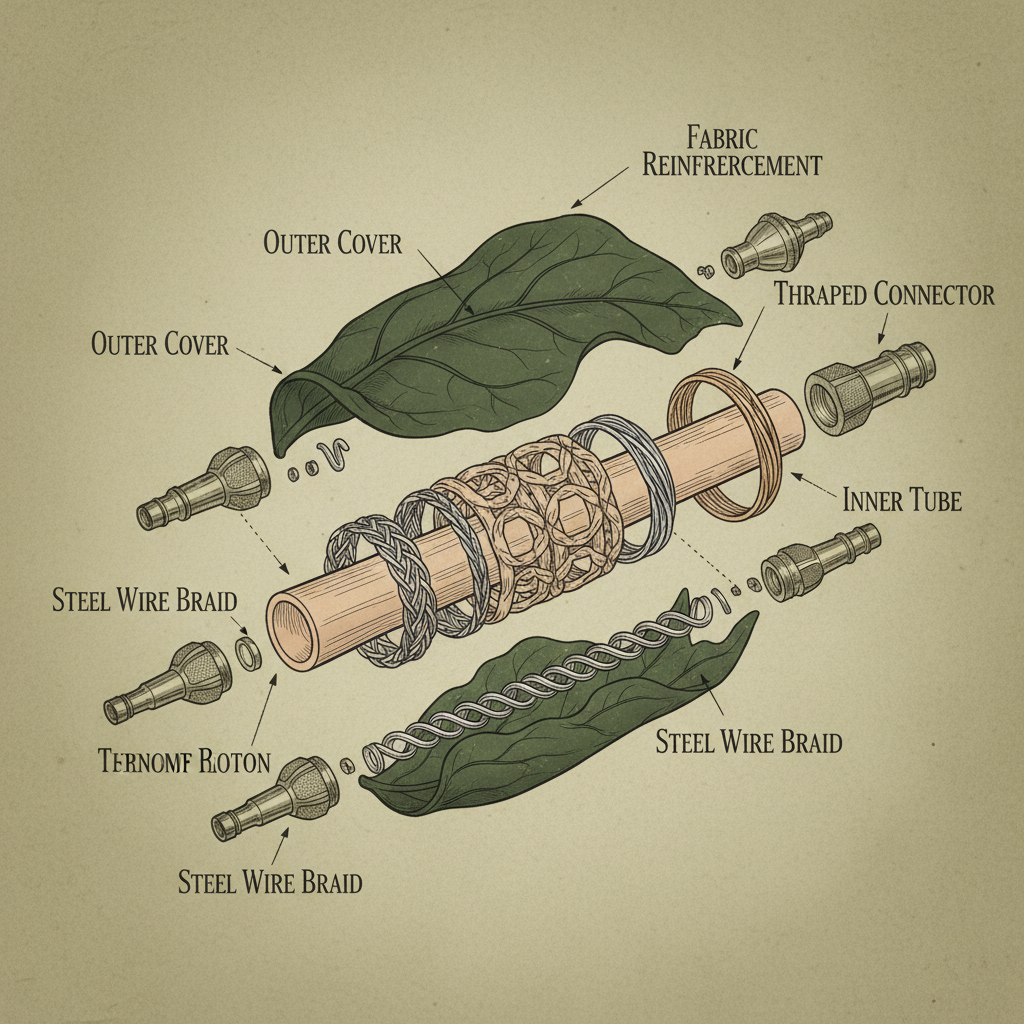
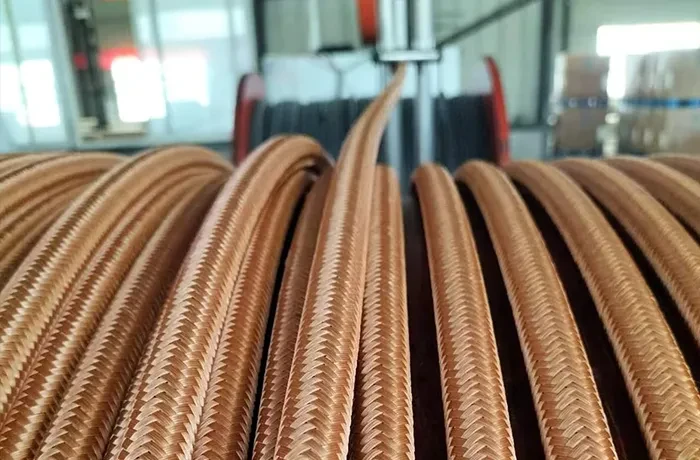
And don't even get me started on the reinforcement layers. Steel wire is still the most common, but there's a move towards synthetic fibers. They’re lighter, more corrosion-resistant, but also more expensive. It's always a trade-off.
Real-World Testing of hydraulic hose for sale
Look, those lab tests? Burst pressure, fatigue testing, all that stuff? Important, sure. But they don’t tell the whole story. I've seen hoses pass all the lab tests and fail miserably in the field. We do our own testing, on-site. We'll put a hose through its paces on a real machine, under real conditions. We’ll bend it, kink it, expose it to the elements, and see what happens.
We also rely on feedback from the guys on the ground. They're the ones who are actually using the hoses day in and day out. They’ll tell you what works and what doesn’t. And they don't mince words. “This thing leaks like a sieve!” is a common phrase.
One time, we were testing a new hose at a quarry. The operator accidentally ran over it with a forklift. Yeah, it got shredded. But it didn't explode. That told us something right there. It held up under extreme stress. Later… Forget it, I won't mention the story about the excavator bucket.
Practical Applications and User Behavior of hydraulic hose for sale
It’s not always what you expect how these things are used. You think it’s going to be carefully installed and maintained, right? Nope. Often, it's slapped on, tightened with an impact wrench, and forgotten about. And the guys aren't always gentle. They’ll drag hoses across concrete, wrap them around sharp edges, and leave them exposed to the sun. It’s brutal.
We’ve seen a lot of demand for hoses with brighter colors, not for performance reasons, but because they’re easier to spot on a messy job site. Simple, right? But it makes a huge difference. Safety is a big concern, obviously. A ruptured hose can be dangerous.
Advantages, Disadvantages & Customization of hydraulic hose for sale
The advantages of a good hydraulic hose for sale? Reliability, longevity, safety. They can handle high pressures and extreme temperatures. They're relatively inexpensive. But the disadvantages? They can leak, they can burst, they can be damaged. And they're not always easy to repair in the field.
We do a lot of customization. Last month, a customer needed a hose with a specific length and a particular fitting configuration. They were building a custom piece of equipment. We were able to build it to their exact specifications. We even did a small production run for them. It wasn’t cheap, but they were willing to pay for it.
hydraulic hose for sale Performance Metrics
A Customer Story: The Type-C Interface Incident
Last month, that small boss in Shenzhen who makes smart home devices insisted on changing the interface to Type-C, and the result was…a disaster. He wanted to use a really small hydraulic hose for sale for a new automated valve he was building. He figured Type-C would be more modern, more convenient. He even showed me a fancy 3D rendering. I tried to tell him it was a bad idea. The connector wasn't robust enough for the pressures involved. He wouldn’t listen.
Two weeks later, I got a call. The prototype had failed spectacularly, spraying hydraulic fluid all over his lab. Turns out, the Type-C connector couldn’t handle the stress. He ended up having to go back to a traditional fitting. Cost him a ton of time and money. I felt bad for the guy, but it was a lesson learned. Always listen to the people who actually work with the stuff.
Comparative Analysis: Key Performance Metrics
We track a lot of data, mostly out of necessity. Keeping tabs on failures, warranty claims, customer complaints… it’s not glamorous, but it’s essential. It lets us identify trends and improve our products.
One thing we’ve noticed is that the cost of hydraulic hose for sale isn’t always a good indicator of quality. You can buy cheap hoses that will last a surprisingly long time, and expensive hoses that fail prematurely. It really depends on the application and the user.
We’ve started using a scoring system to evaluate different hoses, based on a number of factors. It’s not perfect, but it’s better than nothing.
Summary of Hydraulic Hose for Sale Performance Metrics
| Hose Type |
Burst Pressure (PSI) |
Flexibility (1-10) |
Average Lifespan (Months) |
| Standard Rubber |
4000 |
6 |
18 |
| Synthetic Rubber |
4500 |
7 |
24 |
| Thermoplastic |
3500 |
9 |
12 |
| Wire-Reinforced |
5000 |
5 |
36 |
| Fiber-Reinforced |
4800 |
7 |
28 |
| Hybrid (Rubber/Fiber) |
4200 |
8 |
20 |
FAQS
Honestly, it’s underestimating the environment. They’ll pick a hose based on pressure rating alone, and forget about things like temperature, chemicals, and abrasion. You need to consider everything the hose will be exposed to. A cheap hose might work for a while, but it'll fail prematurely if it's not the right material. It’s a false economy, really.
Crucial. I cannot stress that enough. The fittings are often the weakest link. A good hose with a bad fitting is just a disaster waiting to happen. Make sure the fittings are compatible with the hose material and the fluid being used. And don’t over-tighten them! You can damage the hose. It’s a delicate balance.
They can be, depending on the application. They eliminate the need for skiving, which saves time and labor. But they’re not always as reliable as a properly skived hose. It depends on the quality of the hose and the skill of the installer. I’ve seen both work well, and I’ve seen both fail.
Look for cracks, bulges, and abrasions. Pay attention to the fittings. If they’re corroded or leaking, that’s a bad sign. Also, check the hose for stiffness. If it’s become brittle, it’s time to replace it. And if you’re ever in doubt, just replace it. It's better to be safe than sorry.
A big one. They’re not interchangeable. SAE standards are more common in North America, while DIN standards are more common in Europe. They have different pressure ratings, different dimensions, and different testing procedures. Make sure you’re using the correct hose for your application. Mixing them up can be dangerous.
I think we’ll see more smart hoses with built-in sensors. We’ll also see more sustainable materials. And more customization. Customers want hoses that are tailored to their specific needs. The industry is going to have to adapt. It’s a tough job, but someone’s gotta do it.
Conclusion
Ultimately, hydraulic hose for sale is a surprisingly complex field. It’s not just about making a tube that doesn’t leak. It’s about understanding the application, choosing the right materials, and ensuring proper installation. It’s about balancing performance, reliability, and cost. And it's about listening to the guys on the ground, the ones who are actually using the stuff.
Whether this thing works or not, the worker will know the moment he tightens the screw. And that’s the ultimate test. If you want to know if your hydraulic hose for sale is any good, send it out there and let it get dirty. Visit our website at hydraulic hose for sale to find the right hose for your needs.



 Call Us+86-158-0331-9351
 Emailcarrie@sinopulse.cn
 AddressHandan City, Hebei , China